





There is an approach to mine building and maintenance that seems obvious enough: gather your people, build your mine, leave. The person who has been out building in the Bowen Basin coal fields knows that there is no such thing. Pressure to produce, regulations, the remoteness and the technical demands of coal mines add up to an atmosphere of project delivery where the only thing that matters is experience.
Construction and Maintenance Are Not the Same Problem
A construction project at a coal mine has a defined scope, a start date and an end date. Maintenance does not. Ongoing maintenance is continuous, must often occur without interrupting production and responds to equipment degradation that is sometimes predictable and sometimes not. Managing both simultaneously, which is the reality at most active coal mines Bowen Basin, requires parallel planning frameworks that do not interfere with each other even when they are competing for the same people and the same access windows.
Construction teams building new Coal Handling Preparation Plant infrastructure work in a structured project environment with fixed milestones. Maintenance teams on the same site are responding to inspection findings, managing wear rates on running equipment and planning the next shutdown around a production schedule that does not always accommodate them. Both modes of work demand different personnel profiles, different supervision structures and a clear understanding at the management level of which one takes priority when they collide.
What a Major Planned Shutdown Actually Looks Like?
A large planned shutdown at a Bowen Basin operation is a short-duration, high-intensity event. Hundreds of workers arrive on site within a compressed window, each carrying a specific scope of work assigned before the shutdown began. Pre-shutdown planning covers everything: identifying which equipment requires inspection, repair or replacement; sourcing all parts in advance; writing and sequencing work orders; and confirming that licensed tradespeople are available for every scope that requires a specific certification.
Production stops and the clock runs. A single scope that overruns its allocated time pushes back every subsequent scope sequenced around it, and the cost of a late restart is direct and measurable at the scale of a major basin operation. Personnel who are encountering the environment for the first time tend not to fully grasp this pressure until they are inside it, which is precisely why experienced shutdown workers are in consistent demand regardless of the broader labour market.
Coal Handling Preparation Plants: Where Construction and Maintenance Complexity Converge
CHPP plants represent some of the most technically challenging facilities in the coal mining industry environment. A range of processing units such as crushers, screens, dense media vessels, centrifuges and long conveyors process raw coal to produce an export-ready commodity. Building a CHPP plant involves sequential execution by a range of trades in civil, structural, mechanical and electrical disciplines on-site within congested conditions alongside a CHPP plant which is still in operation. Incorrect sequencing in the early stages of the project does not remain confined to this stage but impacts subsequent commissioning and production restart dates.
Maintenance of an existing CHPP plant is facilitated through knowledge of the particular configuration and failure modes of that facility, since no two CHPPs are configured alike. Idler replacement along conveyor runs, assessment of conveyor belt condition, servicing of drive systems and integrity checking of elevated structures are all tasks which require trade personnel who can identify and understand the structure before they can begin maintenance.
Port-side Facilities and Coordination Needed
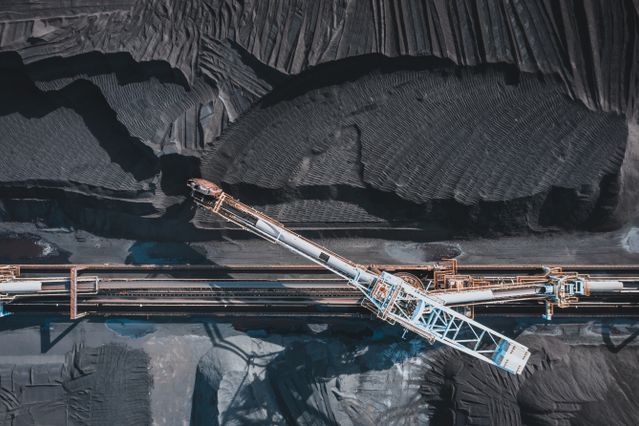
Shiploaders and stacker reclaimers are yet another category of maintenance challenge. Fatigue caused by continued loading, corrosion management in a coastal environment and mechanics of articulation are all issues which arise during the maintenance of these facilities. Coordinating the maintenance of shiploaders with port schedules is particularly important, since the outage of one of these facilities can affect the berthing of vessels across the entire terminal and not just the single berth where the particular facility is located. This inter-dependency ensures that maintenance planning of port-side assets cannot be considered in isolation from the rest of the export program.
What Self-execution Projects Actually Require from External Contractors?
Some operators of the Bowen Basin mines maintain a large proportion of maintenance work in-house and use external contractors for particular scopes or to assist during high demand times. For this self-execution model to function properly, external staff have to become productive immediately without requiring prolonged familiarisation with the site. They have to integrate into the systems of the operator without placing additional supervisory burden on the operator’s internal staff.
Tags:KS

Leave a reply