
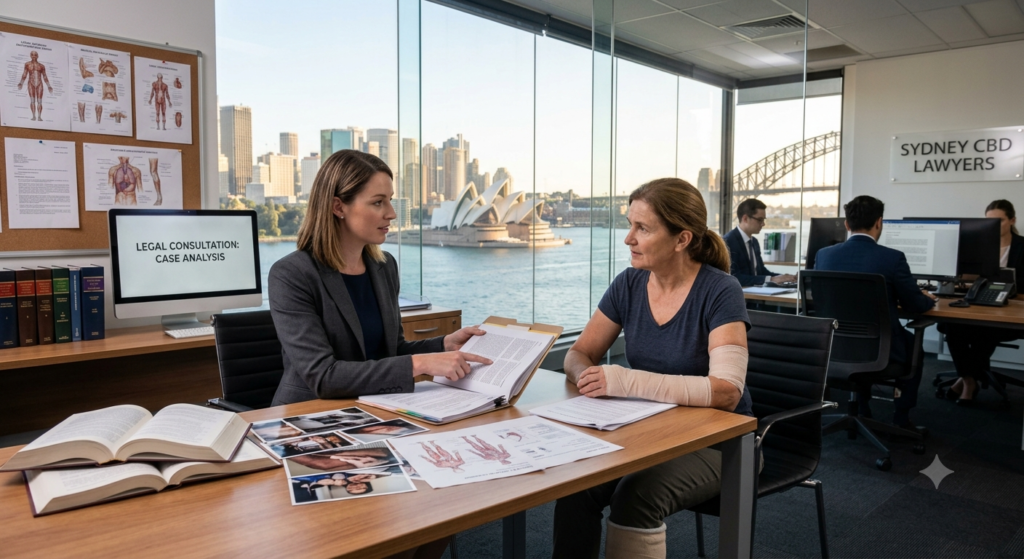
What most injured Sydney citizens do is get in touch with an insurance company immediately following the accident. This may seem like the right thing to do, but the fact of the matter is that the Compulsory Third Party (CTP) insurers and workers’ compensation trusts have their own aims and goals as far as claims management is concerned. A personal injury lawyer in the Sydney CBD region stands between a claimant and that system, and when this meeting takes place becomes crucial.
What Personal Injury Law in NSW Actually Covers?
Although motor vehicle collisions may dominate media coverage, the area of personal injury law in NSW is much broader than that. Motor vehicle accidents are covered by the Motor Accident Injuries Act 2017. Work-related incidents are regulated by the Workers Compensation Act. Public liability issues (slip, trip, dog bite, etc.) are handled through yet another stream of proceedings. The fourth stream is that of medical negligence with its own evidentiary rules and limitation periods. It makes a huge practical difference for your case whether you can identify what stream it belongs to at the very outset. An experienced personal injury lawyer Sydney CBD can help determine the correct legal pathway before critical deadlines or evidence are missed.
Why Location in the CBD Matters Practically?
Proximity to NSW courts, presence of specialist lawyers, and ease of going to consultations are all things that have an impact on how a complex case is handled. Not all personal injury lawyers in NSW are Accredited Specialists by the NSW Law Society. In order to become an Accredited Specialist in Personal Injury Law, one must have experience in the relevant legislation, and in complex cases, it does make a financial difference.
The No Win No Fee Model, What It Actually Means
No Win No Fee is highly publicised but also greatly misinterpreted. “No win, no fee” relates specifically to the legal fees, the professional expenses of a lawyer, and not to the overall costs involved in making a case. Costs such as medical reports, expert witness fees, costs of court appearances, and costs of retrieving medical records from hospitals and insurance companies are added to the bill in a completely separate column. In a simple case, the sum will not amount to much. In a complicated case with many experts, it will add up to quite a lot.
Time Limits Are the Most Underestimated Risk
None more than limitation periods carry such critical weight when underestimated by claimants. According to the NSW motor accident law, an Application for Personal Injury Benefits must be made within 28 days after the accident in order to obtain back-pay from the date of the accident. Although missing this period does not mean that a claim will be automatically dismissed, the claimant loses out on his or her eligibility for income support from day one. As far as the claim for common law damages, which includes large compensation in the form of a lump sum payment for serious injuries, the limitation period lasts for three years from the date of the accident.
What Compensation Actually Looks Like?
NSW compensation laws do not recognise a simple amount for compensation in personal injuries. There are several different types of compensation claims which need their separate evidence and analysis. Medical expenses, as well as other expenses related to rehabilitation, constitute one of the obvious elements. Weekly payments compensate the lost wages while the claimant recovers from the injury. Non-economic losses in the form of a lump sum award are provided for those victims who suffer non-minor injuries. Future care expenses, domestic help, and loss of earning capacity might become additional elements of the claim in case of serious injuries. The classification of the injury as minor or non-minor is a legal decision and not a medical one, with major implications for financial issues.