





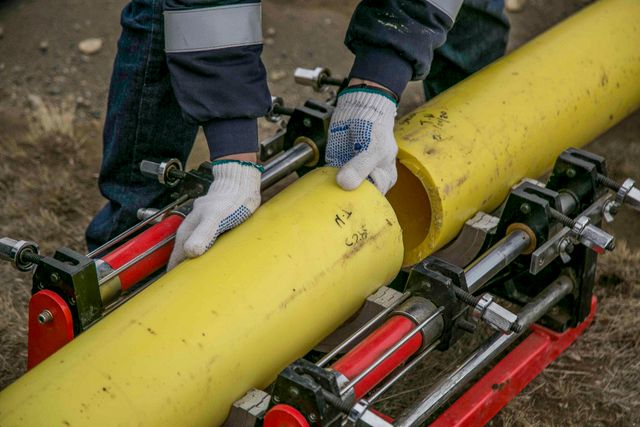
One of the most critical time-sensitive issues in civil construction is the installation of pipe at the right grade – the first time. If this deviation from grade is not discovered early in the run, then it will need to be reworked; this will be time consuming and costly that most projects cannot afford. A pipe laser eliminates this issue by sending a well-targeted and perfectly leveled reference beam along the pipe run, providing a visual reference for line and grade, eliminating the need to perform constant manual checks.
Types of Pipe Laser Applications on Site
The pipe laser can be applied to various civil and drainage projects, each of which has its own requirements. One of the most popular applications is for gravity flow sanitary pipe, where grade control can be critical to the success of the pipe, for it to run properly and to prevent wastewater from pooling or backflowing. The installation of stormwater drainage is similar, and a critical requirement for effective surface water control is a correct grading. In sewer reticulation, residential and commercial, dg211 pipe laser accuracy is also crucial, especially in urban areas where the tolerances are very tight and the trenches are small. In smaller diameter pipe, the laser unit itself must be physically small to fit in the pipe, and provide a visible and accurate beam across the entire length of the run.
How a Pipe Laser Is Set Up and Used
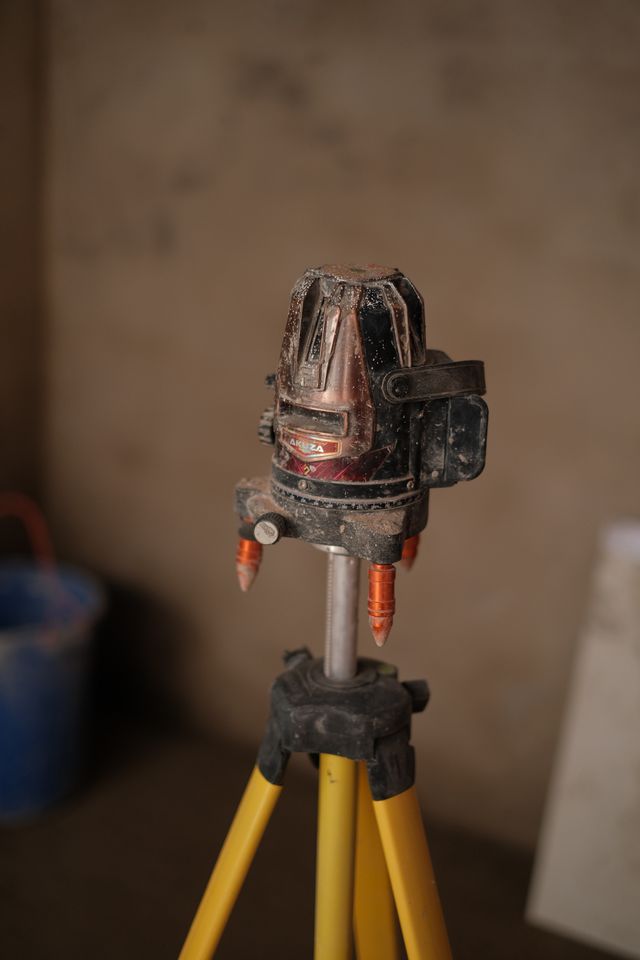
How well the work will be performed from that point on depends on the correct set up of the pipe laser at the beginning of the run. The unit is positioned inside the pipe at the manhole where the pipe is starting and the desired grade is dialed in. The laser automatically levels itself over the entire grade range without the need for manual setting. All critical information is displayed on the OLED screen, which is tilted toward easy viewing above the trench, and includes the current grade value, beam alignment position, housing roll and battery status. A bright red beam, clearer than 100 metres (or more) can be seen along the length of the pipe run, which serves as a clear reference point for the crew to keep track of line and grade in the trench without any other instrumentation. After leveling, the unit will self level and hold grade until the job is finished and a long-life rechargeable battery provides long run operation or alkaline batteries are used for situations where recharging is not an option.
Benefits of Using a Pipe Laser on Construction Projects
The actual usefulness of a pipe laser is far greater than the accuracy of the beam. Self-levelling feature eliminates much of the human error involved in setting-up ensuring the grade reference is set correctly from the start, the instant the unit is turned on. The compact design fits inside standard diameter pipe so the laser can be utilized for all types of projects without the need of different equipment for different pipe sizes. Long battery life minimizes disruption to workflow on long runs and an easy-to-use interface cuts the operator’s setup time and increases productive installation time. One of the most reliable tools available to civil crews that are working on a tight schedule and set grade tolerances for a drainage or sewer project is a quality pipe laser.
Tags:KS











1 Comment
Comments are closed.